Private Pilot Licence
Fly for the love of it
You do not need a career plan, an aviation background, or a spare fortune. You need a free afternoon a couple of times a week and someone willing to teach you properly.
Why people start
What a private licence actually gives you
It is a licence to carry passengers, fly across the country, and go almost anywhere in the United States in daylight or at night, for any reason other than payment.
Go places on your own terms
The Gulf, the mountains, a college game four states away. Trips that cost you a day of driving become an afternoon, and the journey stops being the boring part.
The best kind of hard
Flying is one of the few things left that rewards genuine, patient skill. Every lesson gives you something measurable you could not do the week before.
A community that sticks
Airports are full of people happy to talk. Most of our students end up with a hangar circle of friends they did not expect when they walked in.
The syllabus
Four stages, and you always know which one you are in
Every lesson has a written objective and a completion standard. Nothing is vague, and nothing is billed without a purpose.
Controlling the airplane
Roughly lessons 1 to 10
Straight and level, climbs, descents, turns, slow flight, and the traffic pattern. By the end of this stage the airplane starts feeling like an extension of your hands.
First solo
Roughly lessons 10 to 20
Takeoffs and landings until they are consistent, emergency procedures, and your written knowledge test prep. This stage ends with the flight you will remember for the rest of your life.
Cross-country and night
Roughly lessons 20 to 35
Navigation, flight planning, radio work at unfamiliar fields, night flying, and solo cross-country trips. This is where flying starts to become genuinely useful.
Checkride preparation
Roughly lessons 35 to 45
Polishing maneuvers to test standards, the oral exam material, and a mock checkride with a second instructor before you meet the examiner.
Time and money
An honest answer about cost
Flight training is billed by the hour, so nobody can hand you a single guaranteed number. What we can do is publish our rates, give you a realistic estimate before you commit, and keep a running total you can check any time.
- Typical pace
- Two lessons a week
- FAA minimum flight time
- 40 hours
- Realistic flight time
- 60 to 75 hours
- Estimated total
- PLACEHOLDER, see rate sheet
- Minimum age to solo
- 16
- Minimum age to certify
- 17
A day in training
What an ordinary lesson actually looks like
Flight training is less mysterious than it seems from the outside. Here is the shape of a typical lesson, start to finish, so you know what you are buying.
Before you arrive
You already know what the lesson is
Every lesson has a written brief you receive ahead of time. You show up knowing the maneuvers, the standards you are being held to, and what you should have read.
First 20 minutes
Preflight and briefing
You walk the aircraft with your instructor, check weather and fuel, and talk through the plan on a whiteboard. Nothing about the hour ahead should be a surprise.
The next hour
You fly the airplane
You are on the controls from the first lesson. Your instructor demonstrates, then hands it to you, then talks less and less as the skill takes hold.
Last 15 minutes
Debrief, logbook, next steps
You review what went well, what needs work, and exactly what the next lesson covers. Your logbook is signed before you leave the building.
Between lessons
Ground study that saves you money
Reading and chair flying at home is the cheapest training you will ever do. Students who prepare consistently finish in fewer paid hours.
One hour, no commitment
Your first lesson is a discovery flight
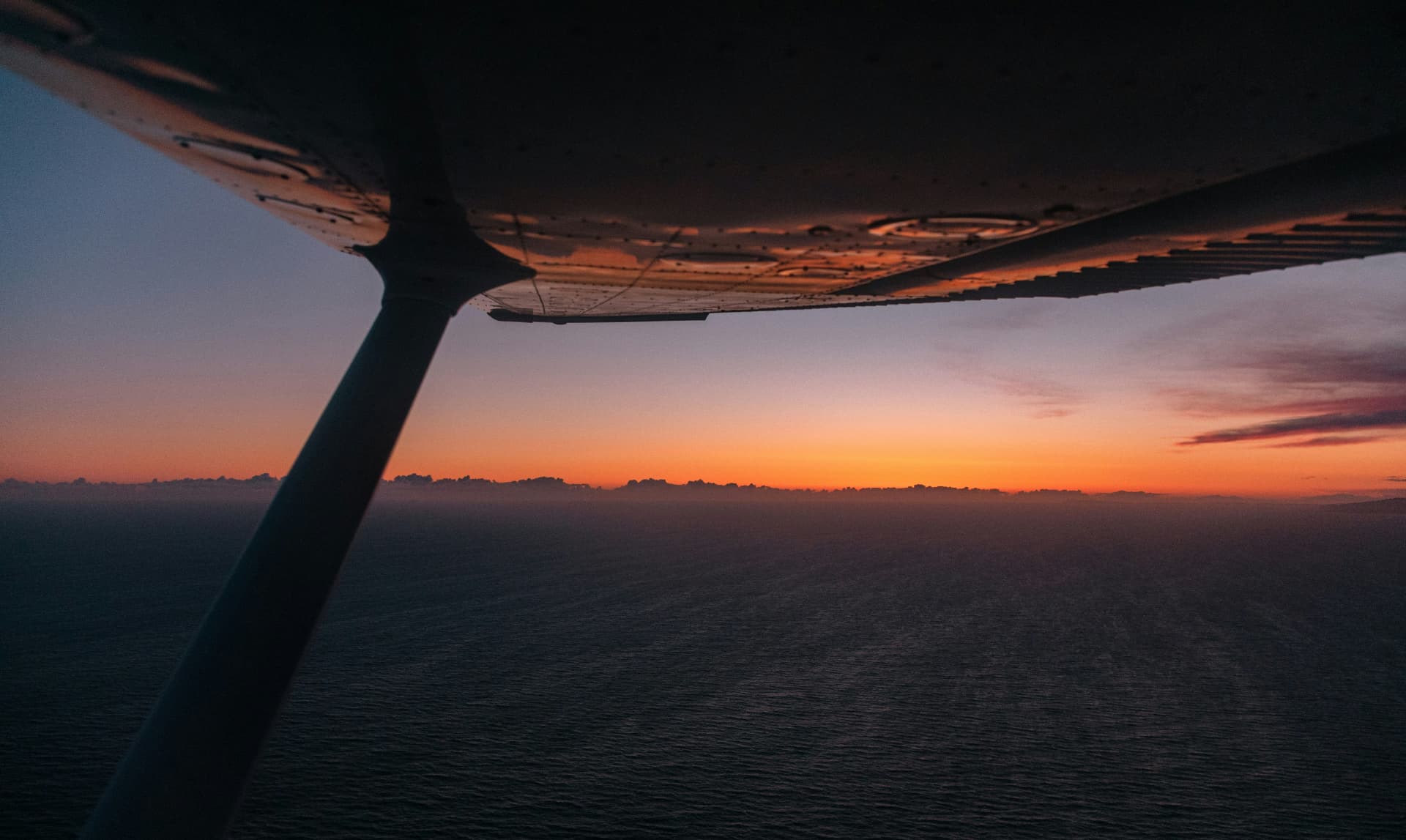
You will do the takeoff roll, fly the airplane for most of the hour, and land back where you started knowing whether this is something you want. Nothing else answers the question as well.